Inquiries answered within 24 hours
Field Notes

New Finds. Honest Takes.
Buying Guides.

No hype, no fluff. Watches worth talking about and things worth knowing before you buy one.

3 posts

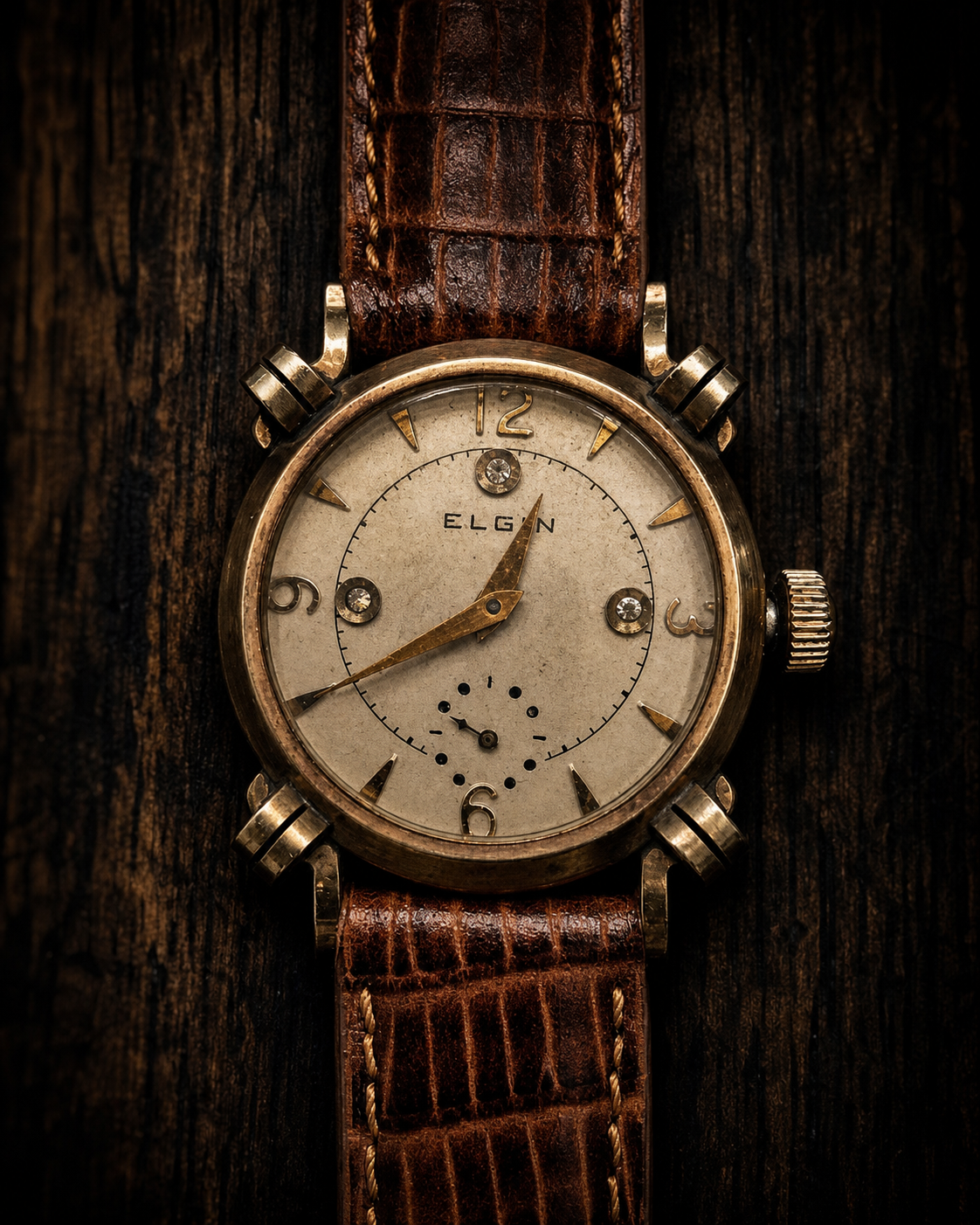
Elgin Marriage Watch circa 1904
May 2026 3 min read

The 1904 Elgin Marriage Watch — When Pocket Movements Got a Second Life

Marriage watches are one of the weirder corners of vintage collecting. Someone took a pocket movement, dropped it into a wristwatch case — usually decades later — and created something that shouldn't exist but somehow works. This Elgin is a perfect example of why I keep hunting for them.

The term "marriage watch" sounds romantic. It isn't — at least not literally. It refers to a pocket movement married to a wristwatch case, usually by a watchmaker bridging the gap between eras or repurposing parts. Common in the early 20th century as the wristwatch took hold and pocket watches became obsolete.

This Elgin came out of a small estate lot. The movement dates to around 1904 — Grade 206, 7 jewel, 16 size. The case is clearly later, probably 1920s, a gold-filled hunting case that someone modified to accept a lug and strap. The dial is original to the movement and in remarkable condition. Aged cream with intact blued steel hands.

Why they're worth knowing about

Marriage watches occupy a strange space in the market. Purists hate them because the movement and case were never together originally. Collectors who actually wear vintage don't care — you're getting a century-old movement in a wearable package, often for a fraction of what a period-correct piece costs.

What to look for: original dial, intact hands, a movement that runs (or is worth servicing), and a case that fits the movement cleanly without obvious gaps or misalignment. Avoid anything where the movement is shimmed in or rattles around.

This one is on eBay now. Priced to move — it deserves a wrist, not a drawer.

May 2026 5 min read

Hamilton Military Field Watches: What to Look For Before You Buy

Hamilton made watches for the U.S. military from World War II through the 1960s. Some of the best vintage buys in the $100–$400 range. They're also one of the most faked and misrepresented references on eBay. Here's what actually matters when you're evaluating one.

Hamilton's military contracts produced some of the most utilitarian, legible watches ever made. The 992B, the GCT, the Khaki field pieces — these movements were engineered to survive conditions most people don't want to think about. The cases aren't glamorous. That's the point.

Movement first, always

Hamilton movements from this era — primarily the 17-jewel calibers — are workhorses. Get a look at the movement before you commit. What you're checking: evidence of heavy amateur service (stripped screws, broken jewels, replacement parts from the wrong caliber), corrosion, or cracked balance staff. A movement that looks untouched but doesn't run is almost always salvageable. One that's been hacked at by someone who didn't know what they were doing is a different story.

Dial originality

Relumed dials are everywhere. Original tritium dials will show natural aging — creamy to brown patina, consistent across all the plots. Fresh lume stands out immediately. It'll be brighter, whiter, and uniform in a way that aged tritium never is. Replacement dials from the wrong era or wrong reference drop the value significantly.

Case condition

Military cases were stainless and took a beating. Expect wear. What you're watching for: polished cases (kills collector value), case backs with incorrect engravings, and cases that don't match the reference period. A good case with honest wear is always preferable to a polished-out case that looks new.

  • Check the case back for military markings — serial numbers, contract codes, government inspection stamps
  • Original crown is often overlooked — wrong crown era is an easy tell on fakes
  • Crystal should ideally be acrylic — replacements are fine but period-correct matters

If you're looking at one and have questions, reach out. Happy to help you evaluate before you commit.

April 2026 4 min read

Benrus Is Still Undervalued and I Don't Understand Why

Bulova gets the nostalgia premium. Hamilton gets the military collector crowd. Elgin gets the marriage watch enthusiasts. Benrus sits in the corner doing everything right and nobody outside a small circle seems to care. That's a buy signal if I've ever seen one.

I've been picking up Benrus pieces for years. The movements are consistently solid — Swiss and domestic calibers that were well-regarded in their day and have aged gracefully. The cases from the 1950s and '60s are some of the best design work of the era. Driver watches, cocktail pieces, military-adjacent field watches. Benrus was doing it all.

The market situation

A comparable Bulova Accutron or Hamilton Khaki from the same period commands 30–50% more on the secondary market for no technical reason. Name recognition drives premiums in vintage watches the same way it does everywhere else. Benrus never got a modern revival moment, no Hollywood placement, no Instagram darling phase. So prices stayed rational.

For a buyer, that's the opportunity. You're getting mid-century American design at honest prices because the collector base hasn't shown up yet. That window closes eventually — it always does.

What I look for specifically

The Type I and Type II military models are the ones worth hunting. Original dials, intact hands, military case back markings. The civilian dress pieces from the late '50s — particularly the curved lugged cases — are also seriously undervalued. Clean dial, good movement, original bracelet or a period strap, and you have something worth wearing.

I source these specifically because I believe in them. When one comes through the shop, it goes up. Most of them move fast once the right person sees them.

No posts in this category yet.

Sell or Trade

Have a Watch You're Ready to Move?

DeathAndDials reviews vintage and pre-owned watches for purchase or trade. Send details and photos and we'll come back with a straight answer.

Submit Your Watch